Few things scratch my brain like a good beef. Kendrick vs. Drake. Justin Baldoni vs. Blake Lively. On my beat, it’s usually two companies fighting over health tech patents. So-and-so copied a feature from so-and-so. The latest dispute on my radar is all about semantics. More specifically, the exact meaning of wellness.
Let me catch you up. On July 15th, the Food and Drug Administration (FDA) sent Whoop a letter. In it, the FDA declared that Whoop — maker of a niche fitness tracker favored by elite athletes — had crossed a line. Its new Blood Pressure Insights feature, the regulator said, was being marketed to customers without undergoing the proper clearance process.
In response, Whoop pulled out the W word: wellness.
In the world of health and wearable tech, “wellness” is sort of like a “get out of jail free” card. Some advanced health features, like EKGs and atrial fibrillation notifications, require regulatory clearance before consumers can use them. These features could be interpreted as diagnostic in nature or prompt a person to make a medical decision. Others, like step tracking and blood oxygen measurements, don’t require FDA oversight at all. They’re simply meant to make living a healthy life easier by helping you visualize certain measurable markers. Those features fall under the wellness umbrella. They’re “just for fun.”
Whoop’s Blood Pressure Insights feature, however, lies in murkier territory.
The way Whoop’s feature works is that a user takes readings with a regular blood pressure cuff for calibration. Once that process is complete, Whoop says its tracker uses metrics like “heart rate, heart rate variability, and blood flow patterns during sleep” to give an estimate of a person’s systolic and diastolic blood pressure each morning. The FDA contends that “providing blood pressure estimation is not a low-risk function” and that a blood pressure estimate inherently implies you’re diagnosing hypo- or hypertension. In a statement, Whoop says it “respectfully disagree[s]” and that this particular feature is more akin to tracking your sleeping respiratory rate. Under the wellness umbrella, Whoop argues it’s able to bring an innovative feature to the masses more quickly.
Whoop and the FDA both have points. It’s not a stretch to think that a user may get a few “high” blood pressure estimates, assume they have high blood pressure, and make health decisions informed by that assumption. At the same time, it’s clearly labeled as a beta feature, and similar “diagnostic adjacent” features are available without FDA regulation. I’ve lost count of how many sleep trackers claim to track “breathing disturbances.” That may not be explicitly marketed as a sleep apnea detection metric (that would require FDA clearance), but that’s semantics. The obvious reason to include it is to flag when a person might want to check themselves for sleep apnea.
The crux of it all is identifying high- and low-risk features for causing harm. Many cases are clear-cut. Natural Cycles, for example, is a period tracking app that claims you can use it as digital contraception using temperature data from wearables like the Oura Ring. It’s obvious that a regulatory body should vet a high-stakes feature like that. On the flip side, Samsung’s new Antioxidant Index feature for its Galaxy Watch 8 is a silly metric that tells you whether you’ve eaten enough fruits and veggies. Even if it’s inaccurate as hell (I was able to fool it by scanning a Cheez-It), it’s not likely to harm your health.
Where the FDA’s current process falls short is the increasing number of features that lie somewhere in the middle. Take the Oura Ring. A friend just asked me whether they should get one based on a TikTok video. In said video, celebrity DJ Dillon Francis says the main reason he has an Oura Ring is because it predicts when he’s getting sick. This is the Symptom Radar feature, which, in simple terms, flags when you might be getting sick — and it’s based on real clinical research conducted during the COVID-19 pandemic. It sounds diagnostic, which requires FDA clearance. But it’s not. It’s considered a wellness feature because it doesn’t tell you what you’re falling ill with — just that you might be showing “early signs of a health change.” And while there’s a distinct difference between a diagnosis and a heads-up, it can feel awfully similar to a layperson.
Also, Whoop isn’t the only company exploring blood pressure tech. Samsung has a similar feature that’s unavailable in the US, as it hasn’t been cleared by the FDA. According to Bloomberg, Apple has also been working on an Apple Watch feature that flags when your blood pressure spikes above your baseline, but it reportedly won’t spit out direct readings like a continuous glucose monitor would — possibly to avoid FDA clearance as a “wellness” feature.
Perhaps that means it’s time we acknowledge that wellness isn’t an innocuous word anymore.
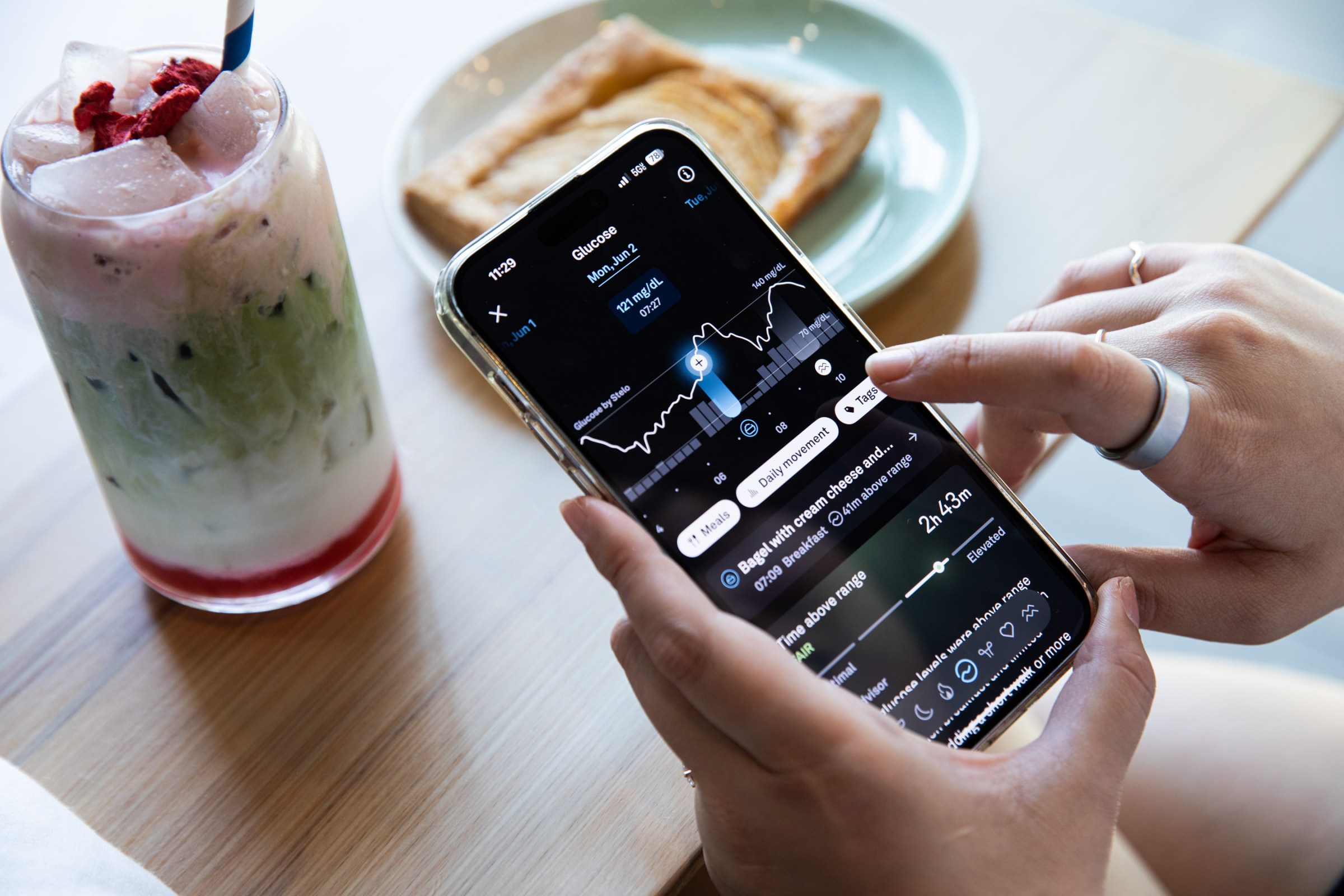
Beyond blood pressure, Samsung and Apple are also widely rumored to be working on blood glucose monitoring features, where the stakes for diabetics could be sky-high. If or when those features do become available, it’s possible that companies will adjust how they work to more broadly fit under a wellness label. For instance, instead of glucose readings, you get a trend line or score. I’m skeptical of the average person being able to discern the nuance when even seasoned tech journalists sometimes struggle with the correct verbiage.
Maybe it seems silly to sound the alarm over semantics. But as politicians advocate for greater wearable adoption, the stakes have never been higher. In a better, ideal world, companies would abolish phrases like “clinically proven” or “medical grade” from marketing. The FDA would figure out a clearer framework for the design of a wellness feature versus a medical one. But we don’t live in an ideal world — and that means it’s up to the consumer to know the difference. Frankly, that’s not going so well. Perhaps that means it’s time we acknowledge that wellness isn’t an innocuous word anymore.
[Notigroup Newsroom in collaboration with other media outlets, with information from the following sources]