Finally, there’s a bipartisan initiative in Congress to fix the mad cash grab that’s plaguing college sports — but it has been greeted with a remarkable hush from the crowd.
The Protect College Sports Act is slated to be introduced by Sens. Sen. Ted Cruz (R-Texas) and Maria Cantwell (D-Wash.).
The idea is to stem the tide of cash flowing to football and basketball that has upended collegiate sports, pitting big schools against smaller ones, and shortchanging women and Olympic sports.
It also seeks to recover donor funds being siphoned away from academics in pursuit of big-name athletes.
Despite its bipartisan approach, however, the bill isn’t guaranteed passage.
It will need a filibuster-proof majority to get through the Senate.
And guess what?
It seems there’s lots of money flowing through Capitol Hill that’s heavily invested in protecting the status quo.
There will be an intense lobbying effort to kill the bill, I am told.
And the NCAA, the ruling body of college sports, has been remarkably silent on Cruz-Cantwell.
That’s despite its history of public complaints that the business of college sports has degenerated in recent years.
“Where are these people supporting this?” said New York Yankees President Randy Levine who alongside Florida Gov. Ron DeSantis led a blue ribbon panel commissioned by President Trump to reform the business of college sports.
“For years they’ve been complaining that the system is out of hand, and now for some reason when we have a fix for most of what they’ve complained about, they’re silent,” Levine told me in an interview.
An NCAA press rep tells us: “We are reviewing the proposed bipartisan legislation and look forward to further productive dialogue with members of Congress, student athletes and NCAA schools to safeguard the opportunities college sports provides to more than half a million student athletes each year.”
As chronicled in these pages, Trump last month issued an executive order that set an Aug. 1 deadline for new national rules and threatened to withhold federal funding for schools that fail to comply.
He staffed the blue ribbon panel with industry experts who understand how college sports has fallen victim to greed.
Under Levine and DeSantis (himself a former college baseball player), the group (which included college athletes) came up with a set of recommendations and worked with the staffs of Cruz and Cantwell.
They’ve focused on what is considered the root cause of the problems, the so-called “Name, Image and Likeness” system.
NIL, as it is known, was initially designed to help student athletes make a few bucks from endorsements.
But a 2021 US Supreme Court ruling voided the NCAA’s limits on amateur compensation as an antitrust violation.
In 2025 a settlement in House v. NCAA introduced a revenue-sharing system that lets schools pay student-athletes directly.
Twisted transformation
As a result, college sports has undergone a twisted transformation into a $50 billion valuation business, with high-stakes media rights and lucrative product endorsement deals for players hawking their signatures.
Top college athletes are now essentially semi-pro even if they’re on tax-exempt scholarships.
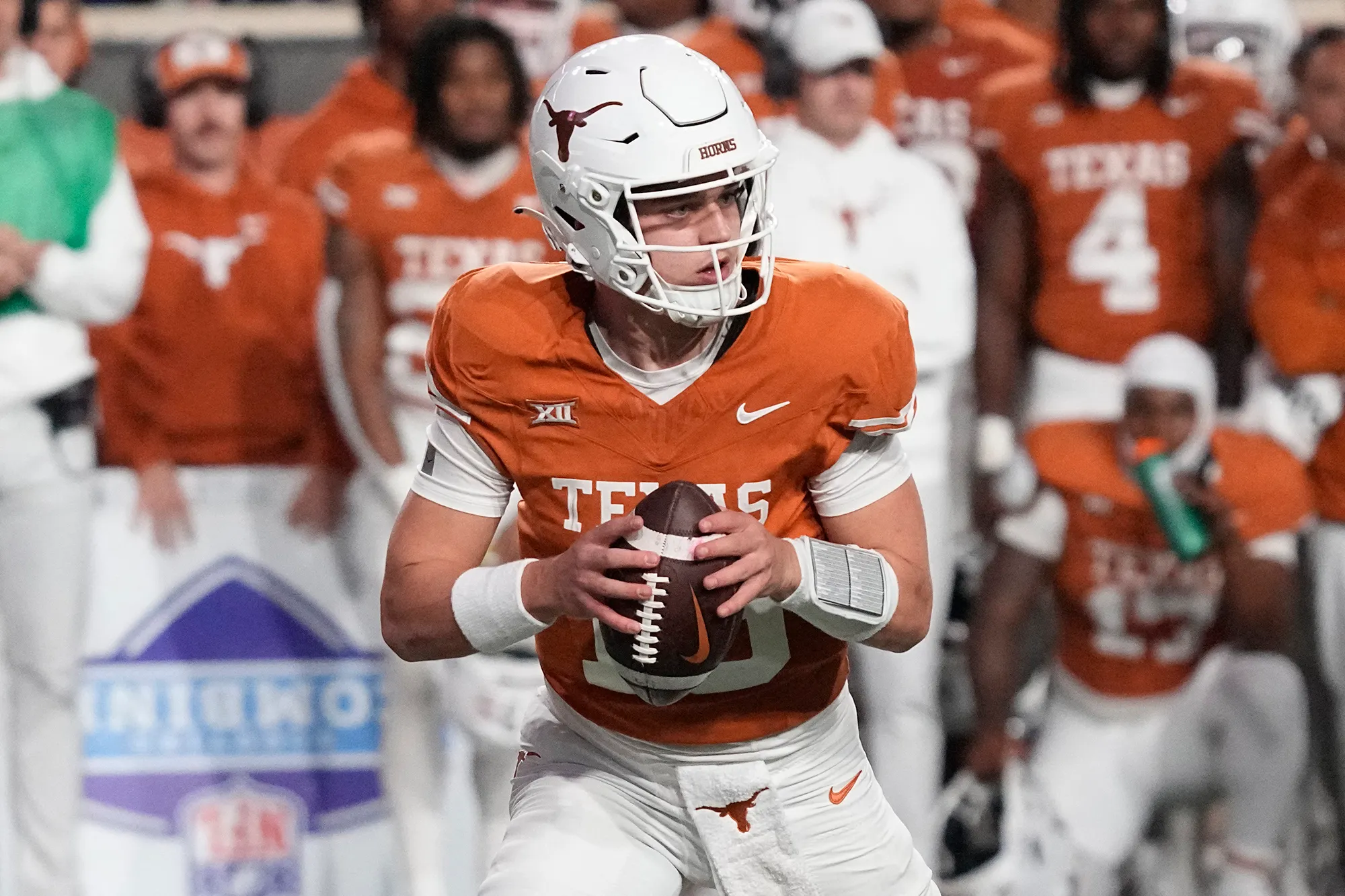
While top stars like football standout Arch Manning get multimillion-dollar deals, coaches are paid salaries rivaling what they get in the pros.
Agents, of course, are at the trough, and schools in the big conferences — the so-called Big 10 and the Southeastern Conference — have the money to compete in the current system.
(A rep for the SEC said the conference is studying the new legislation; a Big 10 rep didn’t respond for comment.)
Even as the various players “review” the Cruz-Cantwell bill, it doesn’t take a rocket scientist to figure out it’s a no-brainer.
It would set standards for NIL payouts to help preserve sports that get shortchanged, and make sure donor money also flows to academics.
College athletes would be eligible for a maximum of five years and school-to-school transfers would be limited.
Meanwhile, so-called “booster” organizations at the center of the NIL money explosion will be subject to enforceable payment caps.
And to be clear, there is no objection to students cutting endorsement deals with big companies to make a few bucks.
The problem is that the NIL system took it all to another level.
Schools cut tennis and other non-revenue-generating programs to finance football and basketball, which attract the biggest endorsement dollars.
If the legislation is successful, we will avert one of the biggest crises ever faced by the US university system.
Donor dollars are being steered away from academics.
Smaller schools, even those in big conferences, are being priced out of the college sports experience.
Top college athletes jump from school to school in search of ever bigger payouts.
Meanwhile, many student athletes outside the stars are stuck in a system that doesn’t protect them.
They’re told to enter the so-called portal to begin jumping to new schools for bigger payouts that often never materialize.
Their scholarships are then forfeited.
Levine tells me the bill itself isn’t perfect and will need to be tweaked along the way.
But, he says, “it solves 80% of the problems everyone is complaining about.”
That seems like a good start.
So why has everybody suddenly gone so quiet?
[Notigroup Newsroom in collaboration with other media outlets, with information from the following sources]