They’re the medical revolution of this century, and the range is rapidly expanding – there are now dozens of weight-loss drugs under development, with ever-better products.
There’s no doubt these types of drugs, which have been around for nearly 20 years to treat type 2 diabetes, can be game-changers for those with severe obesity.
As Carel Le Roux, a professor of metabolic medicine at Ulster University, explains: ‘The benefits may go beyond short-term weight loss, they may also improve heart health, combat kidney disease and lower the risk of dementia.
‘You could start to see results almost within days, although not everyone will.
‘The mechanism behind all of these drugs is simple. They make you feel fuller for longer and reduce your appetite.’
They work by mimicking GLP-1. This hormone stimulates insulin secretion and slows down the rate at which food is digested. This in turn acts in the brain on the reward system to reduce hunger and to signal feelings of fullness.
‘It doesn’t change the appeal of food, just the intense desire for it; as patients say, it quietens “food noise”,’ adds Professor Le Roux.
Because of this you eat less – calorie intake can drop by 70 per cent for the first few months, then levels out to 30 per cent from six months.
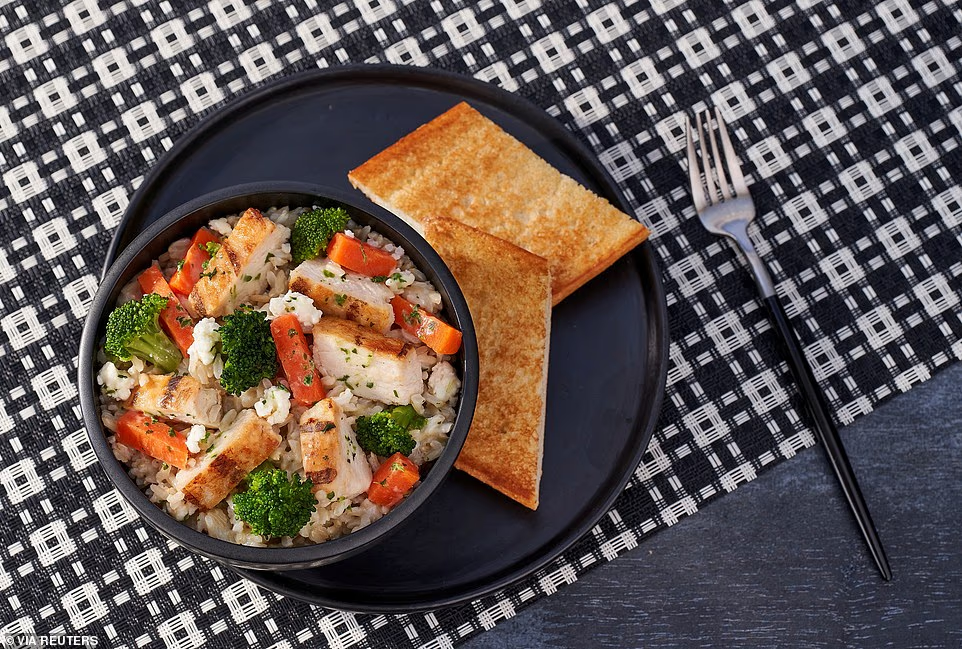
A meal from Nestle’s new brand, Vital Pursuit, targeted specifically at patients on semaglutide. The firm became the first major food company to launch something like this last year
However, this can mean you miss out on important nutrients and protein.
The food industry is now starting to market ranges of foods specifically designed to ‘complement’ these drugs.
Last year, Nestle became the first major food company to launch an entirely new brand, Vital Pursuit, targeted specifically at patients on semaglutide.
The range, currently only available in the US, is designed to provide ‘dietary support to GLP-1 users and consumers focused on weight management’ and features frozen meals such as cauliflower crust three-meat pizza, and chicken, spinach and artichoke sandwich melt. All meals contain at least 20g of protein.
In addition, in June this year it launched ‘Boost Advanced’ – shakes said to ‘meet science-based nutritional recommendations for users of GLP-1 receptor agonists’. They contain 35g of protein to help ‘preserve muscles during weight loss, along with a special blend of nutrients designed to support digestive health and energy metabolism’.
Although the drugs can work for large numbers of people, they don’t work for some.
If the weight loss is less than 5 per cent after three months, you’re known as a ‘non-responder’, which accounts for about 5 to 8 per cent of people, says Professor Le Roux.
Why this happens isn’t clear, adds Alex Miras, a clinical professor of medicine at Ulster University. ‘We suspect it has to do with the way the drug interacts with the GLP-1 receptor in the brain – i.e. how well the key interacts with the lock. If the key enters the lock well then we have a good result and the other way round.’
Professor Le Roux adds: ‘We have zero ability to predict who will fall into this camp.’
[Notigroup Newsroom in collaboration with other media outlets, with information from the following sources]