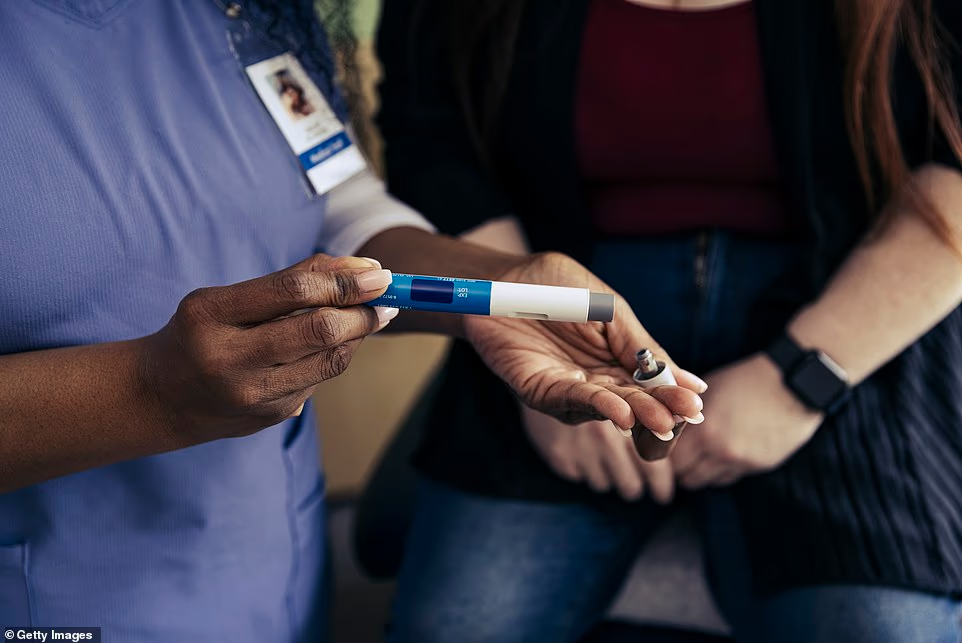
There’s no doubt lots of people would like to be on weight-loss jabs – around one in five Britons has tried to get hold of the drugs over the past year, rising to one in three among 18 to 34-year-olds.
But the cost can be prohibitive, from between £99 to £370 for a month’s supply.
Add to this Eli Lilly’s recent announcement that it was upping its wholesale prices by more than 170 per cent – though it has since been reported that the company is trying to reduce this – experts now fear the market could be flooded with fake drugs.
To get them free on the NHS you have to meet strict criteria to be considered – and even then you may struggle.
For semaglutide (Wegovy), you need to have a BMI of 30 or more, and to have at least one weight-related medical condition such as high blood pressure or sleep apnoea.
The required BMI is lower (27.5) for people from South Asian, Chinese, other Asian, Middle Eastern, Black African or African Caribbean family backgrounds because of their increased risk of disease at lower body weights.
Tirzepatide (Mounjaro), which was only authorised for prescription on the NHS in June, has different criteria ‘due to the large number of patients qualifying and its high cost’, explains Dr Foteini Kavvoura, a consultant endocrinologist at the Royal Berkshire NHS Foundation Trust.
There is a three-year rollout programme, prioritising those with highest clinical need: currently you need to have a BMI of 40 or more, with at least four of the following five weight-related medical conditions: type 2 diabetes, high blood pressure, sleep apnoea, high cholesterol or cardiovascular disease.
For the higher-risk ethnic groups, it’s a BMI of 37.5.
To get weight-loss jabs free on the NHS you have to meet strict criteria to be considered – and even then you may struggle. For semaglutide (Wegovy), you need to have a BMI of 30 or more, and to have at least one weight-related medical condition such as high blood pressure or sleep apnoea
The second phase of the rollout is planned for June 2026 and expected to include patients with a BMI of 35 or more (32.5 for ethnic groups), plus the weight-related conditions.
The criteria are less strict when getting the jabs privately, as it’s according to the drug’s licence rather than NHS rules. Under the licence you can get them if your BMI is 27 or more, and you have at least one obesity-related complication, or simply if your BMI is above 30.
This applies to all medications licensed for obesity, including liraglutide (Saxenda), semaglutide and tirzepatide.
While some people are getting semaglutide in the form of Ozempic for obesity, it’s actually only licensed for type 2 diabetes, so is being prescribed off-label – here, the prescriber bears more responsibility should things go wrong.
When it comes to buying jabs online, there are some precautions that you must take.
To protect yourself you should only buy from a UK pharmacy that’s registered with the General Pharmaceutical Council (GphC), says Laura Wilson, director of the Royal Pharmaceutical Society in Scotland.
This guarantees you’re receiving safe, regulated care. Some illegitimate websites look hugely convincing, so to check, click on the green cross pharmacy logo on the website and you’ll be taken through to the GPhC register, confirming it’s legitimate.
You can also search the website pharmacyregulation.org – which lists every registered pharmacy in the UK.
‘If you don’t need a prescription, there’s no address or number, or if the deal looks too good to be true – avoid it,’ says Laura.
A responsible pharmacy will ask for detailed health information such as your medical history and current medications, confirm your identity and have all this reviewed by doctors. They’ll also provide ongoing support, including how to use the medicine safely and possible side effects.
Expect to pay between £90 and £370 for a month’s supply.
If you’re getting the drug through a private clinic the support you get should be comprehensive – including initial assessments, ongoing monitoring plus customised nutrition, exercise and lifestyle advice.
Check the clinic is registered with the Care Quality Commission: cqc.org.uk. This means it meets essential safety and quality standards.
‘If it’s not registered, you’ve no idea what you’re getting,’ adds Laura.
‘You could get something that doesn’t work at all or, worse, something containing toxins and other ingredients that could cause real harm – you may even end up in hospital.’
Expect to pay from £400 for initial consultations with a GP and a dietitian; between £169 and £375 per month for the medication; and from £170 for follow-up appointments with a GP and dietitian.
[Notigroup Newsroom in collaboration with other media outlets, with information from the following sources]